mardi 30 août 2016

Carl Schmitt


Carl Schmitt, le penseur de l’ennemi

Par Philippe Douroux et Anastasia Vécrin — 3 août 2016 à 17:31
Carl Schmitt lors d’un discours, en 1930.
Carl Schmitt lors d’un discours, en 1930. Photo AKG. Images. Ullstein Bild

Il aurait pu être le juriste du IIIe Reich, mais trop catholique, adorateur d’un Etat total dépassant le Parti national-socialiste, il fut écarté. La droite l’a adoubé en gommant son engagement, des intellectuels de gauche l’empruntent pour cerner ce qui menacerait la démocratie : Etat d’urgence, populisme, excès du libéralisme.


LA SUITE SUR CE LIEN


samedi 21 mai 2016

Linguistification of the Sacred


RETOUR SUR UN AXE TRES IMPORTANT CHEZ HABERMAS
https://www.counterpunch.org/2016/04/15/habermas-contentious-concept-the-linguistification-of-the-sacred/

Habermas’ Contentious Concept: the Linguistification of the Sacred

 
The concept of the linguistification of the sacred has certainly got Habermas into a lot of hot water. On the surface, it does look like Habermas has pronounced the obsolescence of religion in the West’s jagged and bloodied travels to the Land of Modernity. There is a deep ambivalence inscribed into the concept of the linguistification of the sacred.
With the emergence of monotheism, the Creator is imagined as radically apart from his creation. Nature gods and spirits vanish into thin air. We are left alone, standing like Giacometti’s forlorn sculptures, facing away from each other as we gaze into empty space. And in the aftermath of the Protestant Reformation—as we will see with Habermas’ engagement with Weber’s classic theme of the “disenchantment of the world”—the “Protestant ethic” turns to purposive rational and calculating work (which successfully manifests in wealth accumulation) as an ironic sign of God’s grace.
But Habermas’s motivation is not in the tradition of God’s debunkers. Rather, the concept of the linguistification of the sacred is used to examine our journey to modernity—to the world of the primacy of communicative action—from another angle. Habermas is not making an anti-religious form of argument.
He is interested in the learning process whereby the “socially integrative and expressive functions that were at first fulfilled by ritual practice pass over to communicative action; the authority of the holy is gradually replaced by the authority of an achieved consensus” (Habermas, 1987, p. 77). Here we are talking about social evolutionary, historically grounded processes having to do with the function that religion plays in modernity. This, to reiterate, is not an anti-religious argument as such.
If religion is rendered obsolete, it is more in the function it now plays in a social order where the state has separated itself from church, a legal and normative system has created its own rules, churches mainly do pastoral and charitable care and social integration is mediated through communicative action. Mosques, churches and synagogues still operate and religious participants craft forms of piety and observance to sustain their faith commitments; and they do participate sporadically in the public square. But there can be no doubt that the “authority of the holy” is, at best, a faint halo around the contemporary system and lifeworlds of human beings in the West.
What does the “linguistification of the sacred” mean?
The “disenchantment and disempowering of the domain of the sacred” had to clear the way for a “linguistification of the ritually secured, basic normative agreement; going along with this is a release of the rationality potential in communicative action” (Habermas, 1987, p. 77). Like a new creature cracking through an egg-shell, communicative action is released from its captivity to the sacred.
“The aura of rapture and terror that emanates from the sacred, the spellbinding power of the holy, is sublimated into the binding/bonding force of criticisable validity claims and at the same time turned into an everyday occurrence” (ibid.). Drawing from Durkheim, Habermas chooses legal development as powerfully compelling evidence of the way the “sacred foundation of law” (p. 80) has disappeared. Durkheim, as is well-known, believed that religion, or the holy, symbolized the collective interest of the society. No longer does the law proceed downward from the high mountain or the threatening oracle; it is not divinely commanded.
The only thing that will hold the new creature released from captivity will be the “common will, communicatively shaped and discursively clarified on the political public sphere” (p. 81). Humankind is on its own, its wobbly legs revealed, its way forward resolutely set out on the horizontal plane with the ground shaking under foot.
Habermas exclaims: “To the degree that the basic religious consensus gets dissolved and the power of the state loses its sacred supports, the unity of the collective can be established and maintained only as the unity of a communicative community, that is to say, only by way of a consensus arrived at communicatively in the public sphere” (p. 82).
The phrase the “linguistification of the sacred,” Habermas argues, captures the important learning process propelling the movement from ritually formalized contracts to bourgeois private law. In the former, the sacred speaks for itself; in the latter, a “communication community of citizens” uses its “own words” to bring “about the binding consensus” (p. 82).
For his part, Durkheim observes that the “evolution of law” registers “change in the form of social integration affecting society as a whole” (p. 82). This now classic idea—of the shift from organic to mechanical forms of solidarity—was accompanied by a gradual “shrinking down [of] the domain of the sacred” which left “behind a nature bereft of gods” (p. 83). Habermas insists that only when the new creature’s “structures of action oriented to reaching understanding become effective does a linguistification of the sacred arise, determining the logic of the changing form of social integration as described by Durkheim” (p. 88).
Now, with the domains of the cognitive-instrumental, moral-normative and aesthetic-expressive differentiated from each other (each with its own validity claims), under the conditions of the linguistification of the sacred theologians must process the streams of knowledge that flow in from these domains. Religion becomes a “cultural tradition in need of being communicatively continued” (ibid.). It is forced, so to speak, to give reasons for its faith affirmations and learn to dwell with others, secular and religious, hostile and friendly.
Thus, the “conversion of society” occurring over many centuries leaves the “communities of faith” with a range and variety of problem-situations: ontological, epistemological, political and the delicate task of discerning the nature of religious experience in the post-Kantian world. Habermas makes the exceedingly important argument that “neither science nor art can inherit the mantle of religion; only a morality, set communicatively a flow and developed into a discourse ethics, can replace the authority of the sacred in this respect”(p. 92).
But the aura of the sacred lingers on. It is as if modernity has not only freed itself to walk on its own two feet, but also released the sacred to wander around, searching for a place to return (often with vengeance).
Habermas engages Weber to search out the relationship between religion and rationalization
Habermas, the consummate social evolutionary learning theorist, finds in Max Weber a deep well of concepts to understand the relationship between religion and rationalization. He states: “Max Weber’s theory of rationalization extends, on the one side, to the structural changes in religious worldviews and the cognitive potential of the differentiated value spheres of science, morality, and art, and, on the other side, to the selective pattern of capitalist rationalization” (Habermas, 1984, p. 141).
In “Science as a vocation,” Weber (1918-1919) writes: “The fate of our times is characterized by rationalization and intellectualization and, above all, by the ‘disenchantment of the world’” (p. 155). Although the Habermasian concept of linguistification of the sacred holds within itself the notion of a disenchanted world, Weber’s famous aphorism seems to be more than a mere dispassionate social scientific axiom. Indeed, darkness and fatalism hover melancholically around his apocalyptic image of the “iron cage”—our ironic fate as moderns.
“No one knows who will live in this cage (Gehause) in the future, or whether at the end of this tremendous development entirely new prophets will arise, or there will be a great rebirth of old ideas and ideals, or, if neither, mechanized petrification, embellished in a sort of convulsive self-importance. For the ‘last men’ (Letzen Menschen) of this cultural development, it might will be truly said: ‘Specialists without spirit, sensualists without heart; this nullity imagines that it has attained a level of humanity (Menschentums) never before achieved’” (Weber, 1904-5/1992, p. 182). Weber and Adorno dwell disconsolately in the same barred cage. Instrumental rationality triumphant! Humanity emptied of spirit! Weber’s dystopia manifest fully in neo-liberal rationality!
The momentous journey to modernity
One of Habermas’ intellectual tasks in The Theory of Communicative Action (1984) will be to offer us an alternative way of thinking about the rationalization of society. But before he attempts to find the key to unlock the iron cage, Habermas, typically, scouts through Weber’s work to gather necessary insights on the momentous journey to modernity. Habermas discovers that Weber interprets the rationalization process as a social learning process: this means that the differentiated “cultural spheres of value” (science and technology, art and literature, law and morality) emerge through reflective learning and become institutionalized in “cultural systems of action” (scientific enterprises, artistic institutes, legal systems and religious congregations).
To oversimplify, Habermas accentuates Weber’s central theme: “Occidental rationalism is preceded by religious rationalization” (p. 167). This means that the cultural rationalization process is the pacemaker of modernity—the expunging of the magical enchantment of nature, with its roots in the Judeo-Christian worldview, frees the natural world for the calculating mentality.
In fact, theological and scientific disputes in the seventeenth century indicate that economic interests pressed the idea (often associated with Spinoza and Toland) that God indwelt nature to the sidelines in favour of a distant Deist God-in-exile who was external to nature. Nature was now freed to be a brute thing easily exploited once de-spirited. Habermas knows, as Weber does, that ideas (residing in culturally stored knowledge) must have interests propelling them to transpose into the “life conduct of individuals and groups and into social forms of life” (p. 187).
Habermas (1984) argues brilliantly that for societal rationalization to occur, “cultural rationalization” must be released into profane domains. That is, there must be social carriers (or pedagogical forms). Habermas illustrates the way the “social carriers of those strands of tradition that were combined, amazingly, in modern science—the Scholastics, the Humanists, and above all the engineers and artists of the Renaissance—played a role in releasing for purposes of research practice the potential stored in cognitively rationalized worldviews—a role similar to that played by the Protestant sects in transposing ethically rationalized worldviews into everyday practice” (p. 215). He adds that the “cognitive potential” was “set free only in modern societies; and this process of implementation meant the modernization of society” (p. 216).
It is in this context of understanding that the process of modernization is not just about changing beliefs; rather, structures of consciousness require “motivational anchoring and embodiment” (ibid.) as men and women struggle with the demands of economic reproduction and for political power. That is, cognitive potential must “become operative at the societal level” (ibid.).
Habermas admits that there are different pathways for the transference of “understanding of the world from cultural tradition to level of institutionalized social action” (p. 207). To illustrate, by the “eighteenth century there had arisen a scientific enterprise organized into academic disciplines, a university-based jurisprudence, and an informal legal public, as well as an artistic enterprise organized through the market. At the same time, the church lost its global responsibility for the interpretation of the world; along with its diaconal functions, it maintained a partial responsibility for moral-practical questions, in competition with secular authorities” (p. 217).
Habermas and the Protestant ethic under scrutiny
But Weber directs specific attention to his now famous theory of the “Protestant ethic.” For Weber, attention was directed to the “royal road of rationalization: between the sixteenth and the eighteenth centuries [where] there arose in Europe a broadly effective institutionalization of purposive-rational action with structural effects on society as a whole” (ibid.). Both Weber and the Frankfurt School critical theorists acknowledge that: “From an organizational point of view, what is characteristic of both capitalist enterprise and modern state administration is ‘the concentration of the material means of operation’ in the hands of the rationally calculating entrepreneur or leader” (ibid.). What is the origin of this calculating mentality? Weber locates the origin in Protestant vocational culture and the modern legal system.
The Reformed Protestant idea of the calling had ironic consequences for the Christian presence in the world. Habermas provides his paraphrasal explication of Weber. According to “Calvinist doctrine successful activity in one’s calling does not count directly as a means for attaining salvation but as an outward sign for ascertaining a state of grace that is in principle uncertain. By means of this ideological connecting link, Weber explains the functional significance that Calvinism gained for the spread of inner-worldly-ascetic attitudes, but especially for an objectified, systematized conduct of life centered around purposive-rational activity in one’s calling” (p. 223).
Thus, the methodical conduct of life has broken out of intellectual and institutional cloisters. “In the life of religious congregations, which also served as an inspiration to family upbringing, he [Weber] finds the institution that saw to the influence of those teachings or socialization in the carrier strata of early capitalism” (ibid.). The Protestant ethic, then, did not compel its adherents to flee from the world; indeed, the world was there for transformative action upon it.
Habermas offers this great comment. “The systematic character of life conduct that comes about because the layman, unable to rely on priestly sacramental grace or on the assistance of an official establishment for dispensing grace—and this means, unable to divide up his lifeworld into those spheres of life relevant to salvation and those not—regulates his life autonomously according to principles of a post-conventional morality” (p. 224). This is powerful spiritual commitment: one’s labour and life activity is “ethically charged and dramatized” (p. 225).
Weber and Habermas both observe that the Protestant culture of vocation and calling lived before the face of God creates a severe tension. On the one hand, the Christian entrepreneurs are driven by a purposive-rationality that accentuates “egocentric foreshortening” (p. 228); on the other hand, their “ethic of brotherliness” clashes with the unbrotherliness of the capitalist mode of production. Habermas does not think that Weber pursues the theme of the “regression of the ascetic of vocation” which drops the Christian community behind the “communicatively developed ethic of brotherliness” (ibid.).
Thus: “The Protestant ethic of the calling fulfills necessary conditions for the emergence of a motivational basis for purposive-rational action in the sphere of social labor with the value-rational anchoring of purposive-rational orientations, it satisfies, to be sure, only the starting conditions of capitalist society; it gets capitalism underway, without, however, being able to secure the conditions for its own stabilization” (p. 228).
The Christian faith-community, then, sets in motion a process that is “destructive of the Protestant ethic in the long run” (p. 228). Habermas, as we shall see, will try to rescue the “religiously grounded” ethic of brotherliness through articulating the theory of communicative action against Weber’s pessimistic idea that this form of ethics can thrive only in the religious context.
“According to Weber’s diagnosis,” Habermas laments, “the foundation of the vocational orientation in an ethic of conviction is washed away in favor of an instrumental attitude toward work interpreted in utilitarian terms” (p. 241). Habermas will go on panning to recover the gold of communicative action.

mardi 15 septembre 2015

Habermas : le dernier philosophe?

Habermas : le dernier philosophe?
A l'occasion de la parution d'un numéro de la revue "Esprit" intitulé "Habermas, le dernier philosophe", retour sur ce philosophe connu notamment pour ses prises de position sur les questions politiques et sociales.
Quelle vision de l'Europe propose ce penseur allemand extrêmement critique envers le gouvernement de son pays ? Quel rôle est selon lui dévolu aux philosophes et à la raison comme instance critique dans le monde moderne ?
Michael Foessel  : 
Pour Habermas, le savoir est d'essence démocratique.
Jean-Claude Monod  : 
Il y a des choses comme l'accueil de certaines populations, qui relèvent du droit, et non de la philanthropie, ou de l'évaluation morale subjective.

A ECOUTER AVEC MODERATION SUR FRANCE CULTURE

https://www.franceculture.fr/emissions/la-grande-table-2eme-partie/habermas-le-dernier-philosophe 

jeudi 18 juin 2015

Collegium international éthique, politique et scientifique

 DE WIKIPÉDIA

Jürgen Habermas compte également parmi les membres fondateurs du Collegium international éthique, politique et scientifique, association qui souhaite apporter des réponses intelligentes et appropriées qu'attendent les peuples du monde face aux nouveaux défis de notre temps.

http://www.collegium-international.org/fr/

Collegium international souhaite trouver des réponses intelligentes et appropriées qu'attendent les peuples du monde face aux nouveaux défis de notre temps. Un appel1 pour l'établissement du Collegium fut rendu public en  à New York et ses membres ont été officiellement présentés le  à Bruxelles devant le Parlement européen.

mercredi 11 mars 2015


https://sophiapol.hypotheses.org/17271

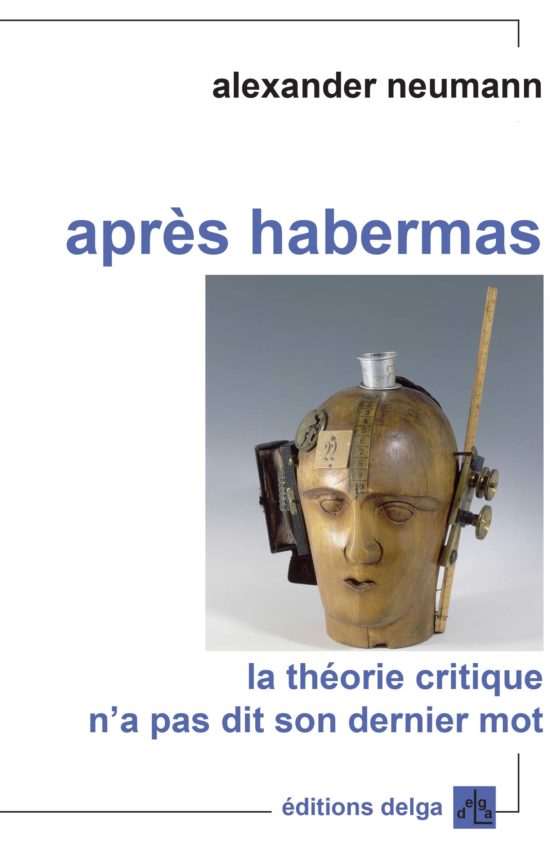
Nouvelle publication : “Après Habermas. La Théorie critique n’a pas dit son dernier mot”, par Alexander Neumann


Dans son livre Après Marx, Jürgen Habermas a voulu reconstruire le matérialisme historique, afin de fonder une théorie sociale au xxe siècle. Il a cherché à transformer l’École de Francfort en une science de son temps. Au lieu d’une telle vision évolutive, consensuelle et universaliste, l’histoire a réservé des surprises. La crise capitaliste mondiale, le retour des mouvements, révolutions, espaces publics oppositionnels, ainsi que la résurgence des obsessions identitaires, sont des phénomènes qu’Habermas n’a pas prévus. Son modèle d’explication, qui devait assurer la base post-nationale d’une mondialisation démocratique, est en miettes. Après Habermas expérimente la même approche que celle qu’Habermas a appliquée au marxisme, en la poussant jusqu’au bout.
Le résultat est une renaissance de la Théorie critique initiale, née au milieu de l’entre-deux-guerres, dans une Europe en plein doute. Dans un triple saut, Après Habermas rend pensable une issue : comprendre les raisons des premières critiques du bureaucratico-capitalisme, retisser un dialogue entre le travail, le faire et l’action, et enfin conceptualiser les espaces publics oppositionnels. Dans cette lancée, Alexander Neumann pointe les apports des auteurs historiques vivants (Oskar Negt, Nancy Fraser, Axel Honneth) et saisit les correspondances franco-allemandes méconnues des penseurs français les plus connus (Bourdieu, Castoriadis, Foucault).
« L’étendue de ces travaux permet de penser qu’ils pourraient facilement engendrer un opus magnum » Oskar Negt.
.
Alexander Neumann, né à Düsseldorf en 1971, est un chercheur franco-allemand qui évolue entre les pensées critiques de l’Université Vincennes et l’École de Francfort. Chargé de recherche à l’Université de Rouen, puis à l’Institut für Sozialforschung de la Sarre, il est actuellement rattaché au Sophiapol Paris Ouest. Titulaire d’un doctorat à la Sorbonne (Paris 5) et d’une habilitation à diriger des recherches au CSU-CNRS (Paris 8), il est l’auteur de Kritische Arbeitssoziologie (Schmetterling Verlag, Stuttgart, 2011), Conscience de casse. La sociologie de l’École de Francfort (Burozoïques, Paris, 2010) et Le principe Hartz (à paraître).
.

Table des matières

.
Introduction : “Le plus grand penseur du xxsiècle”
I. La Théorie critique : son pur et fréquences1. Le grondement wagnérien de la révolution conservatrice
2. L’accord de Michel Foucault
3. Ouverture : la recherche sociale
4. Dissonances d’Adorno (Durkheim, Weber, Marx, Freud)
II. Répéter, faire, agir1. Personnalité minoritaire et minorités agissantes
2. Soumission du salariat, critique du travail, non-travail
3. Lorsque l’oikos danse à l’agora4. Agir communicationnel ou subjectivité rebelle (Eigensinn)
III. L’espace public oppositionel1. L’espace public civil-bourgeois hier et aujourd’hui
2. L’espace public prolétarien (Negt et Kluge)
3. Une démocratie post-bourgeoise ? (Fraser)4. Honneth au-delà d’Habermas ?
Bilan et perspectives
Bibliographie
.
.
Informations techniques :Après Habermas. La Théorie critique n’a pas dit son dernier mot, par Alexander Neumann
Editeur : Editions Delga
Référence : 978-2-915854-74-9
Prix : 18 euros
.

dimanche 18 janvier 2015

Le djihadisme, une forme moderne de réaction au déracinement »


Jürgen Habermas : « Le djihadisme, une forme moderne de réaction au déracinement »

Le fondamentalisme djihadiste n’est en rien une religion, souligne le philosophe allemand.
Publié le 19 novembre 2015 à 12h11 - Mis à jour le 26 novembre 2015 à 15h34   Temps deLecture 7 min.
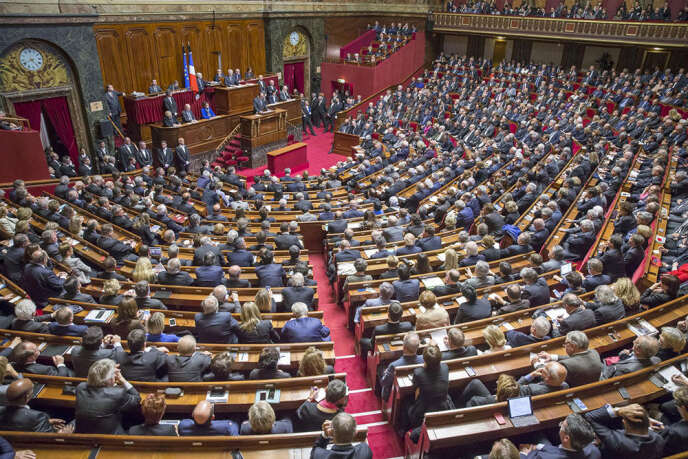
François Hollande, président de la République, parle devant le Parlement réuni le 16 novembre en Congrès après la série d'attentats à Paris le 13.
François Hollande, président de la République, parle devant le Parlement réuni le 16 novembre en Congrès après la série d'attentats à Paris le 13. Jean-Claude Coutausse / french-politics pour Le Monde
Le président François Hollande veut définir un « état de guerre » adapté à la situation. Que pensez-vous de cette discussion ? Croyez-vous plus généralement qu’une modification de la Constitution soit une réponse adaptée aux attentats du 13 novembre ?
Jürgen Habermas.- Il me semble sensé d’adapter à la situation actuelle les deux dispositions de la Constitution française relatives à l’état d’urgence. Si cette question est désormais à l’ordre du jour, c’est parce que le président a proclamé l’état d’urgence à la suite des événements choquants de la nuit du 13 au 14 novembre, et entend le prolonger trois mois durant. Je peux difficilement juger de la nécessité de cette politique et de ses raisons. Je ne suis en rien un expert des questions de sécurité.
Mais, envisagée à distance, cette décision ressemble à un acte symbolique permettant au gouvernement de réagir – vraisemblablement de la manière qui convient – au climat régnant dans le pays. En Allemagne, la rhétorique guerrière du président français, guidée semble-t-il par des considérations de politique intérieure, suscite plutôt des réserves.

Le président Hollande a aussi décidé d’accroître son niveau d’intervention en Syrie, notamment en bombardant Rakka, la « capitale » de l’Etat islamique, et en se rapprochant de la Russie. Que pensez-vous de l’interventionnisme en général ?
Il ne s’agit pas d’une décision politique inédite mais seulement de l’intensification de l’engagement de l’aviation française, qui est en action depuis déjà un certain temps. Certes, les experts se montrent d’accord pour dire qu’un phénomène aussi déconcertant que l’Etat islamique – ce mélange de « califat » n’ayant pas encore trouvé son territoire définitif et de commandos de tueurs essaimant à l’échelle du globe – ne peut être vaincu uniquement par les armes aériennes.
Mais l’intervention au sol de troupes américaines et européennes n’est pas seulement irréaliste, elle serait avant tout d’une grande imprudence. Il ne sert à rien d’agir en court-circuitant les pouvoirs locaux. Obama a appris des interventions de ses prédécesseurs et de leurs échecs, et a insisté sur un point important lors du dernier sommet du G20 qui s’est déroulé il y a peu en Turquie. Il a souligné que des troupes étrangères ne peuvent garantir très longtemps, après leur retrait, le résultat de leurs succès militaires.
Du reste, on ne peut prendre à la gorge l’Etat islamique en recourant aux seuls moyens militaires. Les experts se montrent également d’accord sur ce point. Nous pouvons considérer ces barbares comme des ennemis, et nous devons lutter contre eux, inconditionnellement ; mais, si nous voulons vaincre cette barbarie sur le long terme, nous ne devons pas nous leurrer quant à ses raisons, qui sont complexes.
Ce n’est sans doute pas le moment pour une nation française profondément blessée, pour une Europe bouleversée et une civilisation occidentale ébranlée, de se souvenir de l’origine de ce potentiel de conflit explosif et momentanément non maîtrisé du Proche-Orient – de l’Afghanistan et de l’Iran jusqu’à l’Arabie saoudite, l’Egypte et le Soudan.
Que l’on se remémore seulement ce qui s’est passé dans cette région depuis la crise de Suez de 1956. Une politique des Etats-Unis, de l’Europe et de la Russie déterminée presque exclusivement par des intérêts géopolitiques et économiques s’est, dans cette fragile région du monde, heurtée à un héritage de l’époque coloniale à la fois artificiel et fait de déchirements ; et cette politique a tiré profit des conflits locaux sans stabiliser quoi que ce soit.

En Allemagne, la rhétorique guerrière du président français, guidée semble-t-il par des considérations de politique intérieure, suscite plutôt des réserves

Comme chacun sait, les conflits opposant les sunnites et les chiites, dont le fondamentalisme de l’Etat islamique tire aujourd’hui en premier lieu ses énergies, se sont à l’évidence déchaînés à la suite de l’intervention américaine en Irak décidée par George W. Bush, qui a bafoué les règles du droit international.
Le coup d’arrêt au processus de modernisation de ces sociétés s’explique également par certains aspects spécifiques de la très fière culture arabe. Mais l’absence de perspective et d’espoir en l’avenir qui afflige les jeunes générations de ces pays, avides de mener une vie meilleure, avides aussi de reconnaissance, est en partie le fait de la politique occidentale.
Ces jeunes générations, lorsque échouent toutes les tentatives politiques, se radicalisent afin de regagner leur amour-propre. Tel est le mécanisme de cette pathologie sociale. Une dynamique psychologique semblablement désespérée, qui trouve là encore son origine dans ce défaut de reconnaissance, semble aussi faire de petits criminels isolés, issus des populations immigrées européennes, les héros pervers de commandos de tueurs téléguidés. Les premières enquêtes journalistiques consacrées au milieu et aux itinéraires respectifs des terroristes du 13 novembre le laissent en tout cas supposer. A côté de la chaîne de causalité qui conduit en Syrie, il en existe une autre, qui attire l’attention sur les destins ratés de l’intégration dans les foyers sociaux de nos grandes villes.
Lors des attentats du 11 septembre 2001, des intellectuels, dont le philosophe Jacques Derrida et vous-même, s’étaient inquiétés du recul des libertés démocratiques que risquaient de provoquer la pression de la lutte contre le terrorisme et le recours à des notions comme la « guerre des civilisations » ou « les Etats voyous ». Le diagnostic a été largement vérifié par l’usage de la torture, les contrôles de la NSA, les détentions arbitraires de Guantanamo, etc. Une lutte contre le terrorisme qui maintiendrait l’espace public démocratique intact est-elle, selon vous, possible ou pensable ? Et à quelles conditions ?
Un regard rétrospectif sur le 11-Septembre ne peut que nous conduire à constater, comme nombre de nos amis américains, que la « guerre à la terreur » de Bush, Cheney et Rumsfeld a abîmé la constitution politique et mentale de la société américaine. Le Patriot Act adopté à l’époque par le Congrès, encore en vigueur aujourd’hui, porte atteinte aux droits fondamentaux des citoyens, et touche à la substance même de la Constitution américaine.
Et il est permis d’en dire de même de l’extension fatale de la notion de combattant ennemi, qui a légitimé Guantanamo et d’autres crimes, et qui n’a été écartée que par l’administration Obama. Cette réaction irréfléchie aux attentats du 11-Septembre, qui avaient été jusqu’alors inconcevables, explique en bonne part la propagation d’une mentalité incarnée aujourd’hui par une personnalité aussi innommable que Donald Trump, candidat aux primaires républicaines. Ce n’est en rien une réponse à votre question. Mais ne pouvons-nous pas, comme les Norvégiens en 2011, après l’effroyable attentat commis sur l’île d’Utoya, résister au premier réflexe du repli sur soi face à l’inconnu incompréhensible et de l’agression contre l’« ennemi intérieur » ?
J’ai bon espoir que la nation française donne au monde un exemple à suivre, comme elle l’a fait après l’attentat ayant visé Charlie Hebdo. Il n’est pas besoin pour cela de riposter à un péril fictif tel que l’« asservissement » à une culture étrangère qui, soi-disant, menacerait. Le danger est bien plus tangible. La société civile doit se garder de sacrifier sur l’autel de la sécurité toutes ces vertus démocratiques d’une société ouverte que sont la liberté de l’individu, la tolérance vis-à-vis de la diversité des formes de vie et la bonne disposition à adopter la perspective d’autrui. En face d’un Front national qui se renforce, cela est plus facile à dire qu’à faire.
Ne pouvons-nous pas, comme les Norvégiens en 2011, après l’effroyable attentat commis sur l’île d’Utoya, résister au premier réflexe du repli sur soi face à l’inconnu incompréhensible

Mais il existe de bonnes raisons de réagir ainsi, qui ont peu à voir avec des incantations. La plus importante est évidente : le préjugé, la méfiance et le rejet de l’islam, la peur de l’islam, et la lutte préventive contre lui, doivent beaucoup à une pure et simple projection.
En effet, le fondamentalisme djihadiste a certes recours dans ses manières de s’exprimer à tout un code religieux ; mais il n’est en rien une religion. Il pourrait recourir, à la place du langage religieux qu’il utilise, à n’importe quel autre langage religieux, et même à n’importe quelle idéologie promettant une justice rédemptrice.
Les grands monothéismes ont des origines qui remontent très loin dans le temps. Le djihadisme, en revanche, est une forme absolument moderne de réaction à des conditions de vie caractérisées par le déracinement. Attirer l’attention, dans un but préventif, sur une intégration sociale en panne ou sur une modernisation sociale défaillante, ce n’est naturellement pas exempter les auteurs de ces méfaits de leur responsabilité personnelle.
L’attitude de l’Allemagne face à l’afflux des réfugiés a surpris positivement, malgré les reculs récents. Pensez-vous que la vague terroriste puisse modifier cet état d’esprit - puisque certains islamistes ont cherché à s’infiltrer dans le flot des réfugiés ?
J’espère que non. Nous sommes tous dans le même bateau. Le terrorisme comme la crise des réfugiés constituent des défis dramatiques, peut-être ultimes, et exigent une coopération étroitement solidaire à laquelle les nations européennes ne se sont jusqu’à présent pas encore résolues, y compris dans le cadre de l’union monétaire (Traduit de l’allemand par Frédéric Joly).
Jürgen Habermas est né en 1929. Son nom est associé à l’école de Francfort. Il développe dans son œuvre une philosophie de l’espace public démocratique

samedi 3 janvier 2015

Espace public et délibération chez Habermas


E ECOUTER SUR FRANCE CULTURE

Avec Alexandre Dupeyrix, auteur notamment de : 
  • "Habermas. Citoyenneté et responsabilité", Paris, Maison des Sciences de l’Homme, coll. « Philia Monde », 2012 (422 p.) 
  • "Comprendre Habermas", Paris, Armand Colin, 2009 (196 p.)
Et Heinz Wismann, philosophe et philologue. 

https://www.franceculture.fr/emissions/les-nouveaux-chemins-de-la-connaissance/la-croisee-des-chemins-35-espace-public-et